Blog
What Happens During a Central Heating Service?
What a proper central heating service involves
A boiler service should leave you with a clear understanding of the condition of your heating system, not just a tick on a checklist. When we carry out Central Heating Servicing in Dunbar, East Lothian, Haddington or the Borders, we work through the appliance methodically and explain anything that needs attention.
The exact process depends on the boiler, the installation and how accessible the relevant components are. A modern combination boiler may need different checks from an older boiler or an LPG boiler. The important point is that servicing is a process of inspection, testing and informed judgement, rather than simply wiping down the case.
1. We start with the installation, not just the boiler
Before opening or testing anything, we need to understand what is in front of us. That includes identifying the boiler make and model, checking the installation around it and noting how the system is arranged.
Access matters. A boiler fitted in a kitchen cupboard, utility room or tight storage cupboard may need different access from one installed in an open garage or equipment area. We need sufficient access to inspect the appliance safely and reach the components that require testing. If access is restricted, it can affect what can be examined and whether further work is needed.
We also pay attention to the wider heating system. Radiators, pipework, controls and visible valves can provide useful clues about how the system is operating. A boiler may be functioning, but signs of pressure loss, leaking connections or poor circulation elsewhere can still point to a problem that needs explaining.
2. The appliance is inspected for condition and safety
The casing, visible connections and accessible internal areas are checked for signs of damage, corrosion, staining, leaks or heat-related deterioration. These details matter because they can indicate an issue developing inside the appliance or with the surrounding installation.
Where cleaning is required and appropriate, accessible components are cleaned as part of the service. Dirt and deposits can interfere with the way some parts operate, but cleaning is not a substitute for testing. A component may look acceptable and still fail to perform correctly, which is why the inspection continues beyond appearance.
The flue, which carries waste gases away from the property, is also important. We consider its condition, route and outlet as part of the safety assessment. We look for issues that could affect the safe removal of those gases, particularly where the flue passes through or near building fabric.
3. Safety and combustion checks show how the boiler is operating
A boiler can produce heat while still operating inefficiently or unsafely. Testing provides evidence that a visual inspection cannot.
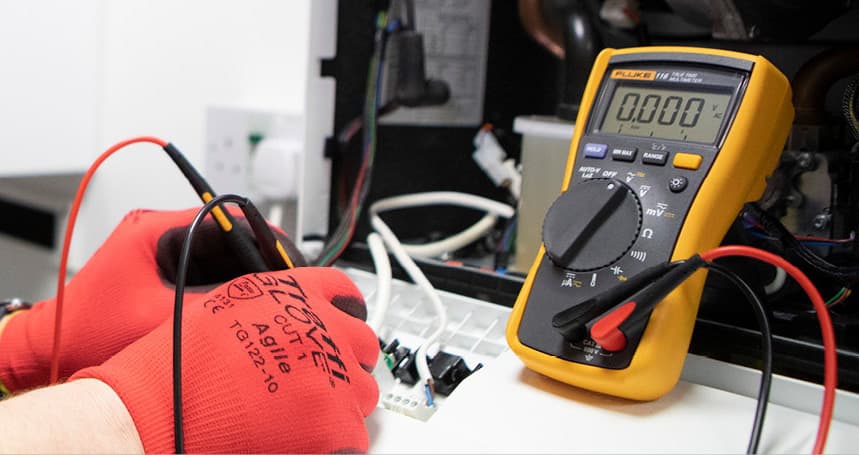
We carry out the relevant safety checks and check how the boiler is burning fuel, using equipment and procedures suited to it. This helps identify unusual operation and checks whether waste gases are being safely removed. Pressure checks are also part of understanding the appliance and heating system, although pressure readings need to be interpreted in context. A reading that changes repeatedly may suggest a different issue from a system that simply needs normal adjustment.
These checks are particularly important because Carbon monoxide is not something you can reliably identify by sight or smell. A carbon monoxide alarm can provide an additional safeguard in the home, but professional servicing and testing remain important.
4. We separate normal maintenance from a developing fault
One of the most useful parts of a service is distinguishing between a component that needs routine attention and one showing evidence of a deeper problem. Wear, restricted movement, corrosion, unusual readings or repeated pressure changes can all alter the recommendation.
We do not treat every observation as an emergency, and we do not dismiss a small warning sign simply because the boiler is still producing heat. Instead, we explain what we have found, why it matters and what may happen if it is left unresolved. Some issues can be monitored. Others need repair before the appliance should continue operating.
If a safety-critical fault is identified, the priority is making the situation safe and explaining the next step clearly. Any repairs should be understood and agreed before they begin. A service is not an open-ended instruction to replace parts. It is an assessment that gives you the information needed to make a sensible decision.
5. The service record matters after we leave
A written record should capture what has been checked, the condition observed and any recommendations made. Keep this with your boiler documentation, particularly if the manufacturer requires evidence of servicing for warranty purposes. The relevant requirements depend on the boiler manufacturer and the terms attached to that appliance.
As an Ideal Accredited Installer and a Worcester Bosch business, we understand why accurate records and manufacturer guidance matter. Accreditation does not remove the need to assess the individual boiler, but it supports a careful approach to appliances from those manufacturers.
You should also make a note of any changes after the service, such as repeated pressure loss, unusual noises, irregular heating or fault codes. These details can help us investigate efficiently if a separate repair is needed later.
Preparing for the appointment
Make sure the boiler and its controls can be reached, and tell us about any known faults, fault codes or recent changes in performance. If the boiler is in a cupboard, clear anything that prevents safe access. Do not remove the boiler casing, alter gas connections or attempt internal checks yourself. Those tasks require the appropriate competence and equipment.
At S.J.D Plumbing & Heating, we service gas and LPG heating systems across Dunbar and the surrounding areas. We will explain what the service has shown, what needs attention and which recommendations are urgent or preventative, so you can make an informed choice about your heating system.
Other Articles